Photosymbols: putting DIY in the picture
This Spring, DIY worked with Photosymbols to explore how written information can be easier to understand – and helped create new images for their photo library.
Why Photosymbols exists
We’ve all faced complex forms or paperwork from time to time – in healthcare, education, employment (and beyond). This information helps us make choices about how we live our lives.
But if it’s very long, confusing, or hard to read it makes those choices more difficult. For members of our community, this can make important services tough to access or exclude people entirely.
That’s why organisations like Photosymbols exist. They create pictures and tools to help authors share information in a way that is easier to understand (sometimes called Easy Read).
How we use Photosymbols at DIY
At DIY, we’ve been using images from the Photosymbols library since 2019. They cover a range of topics that support written text and feature real people from the learning disability community. Holly from Photosymbols explains:
“Every image is carefully designed so that it genuinely conveys meaning rather than just looking nice. But it’s not just about understanding – seeing yourself represented in everyday documents matters too.”
We initially started adding these images to feedback forms and presentations. Now, we use them everywhere – alongside simple words and short sentences – so that all our important documents meet Easy Read standards.
DIY trainee Amy Carter has also worked with the Equality, Diversity and Inclusion Officer at Lowry to support their practice around Easy Read policies, while DIY’s Policy Group continues to ensure all policies are available in accessible formats.
So, when Photosymbols asked if DIY wanted to be part of this photo library, we very quickly said yes!
The photoshoot
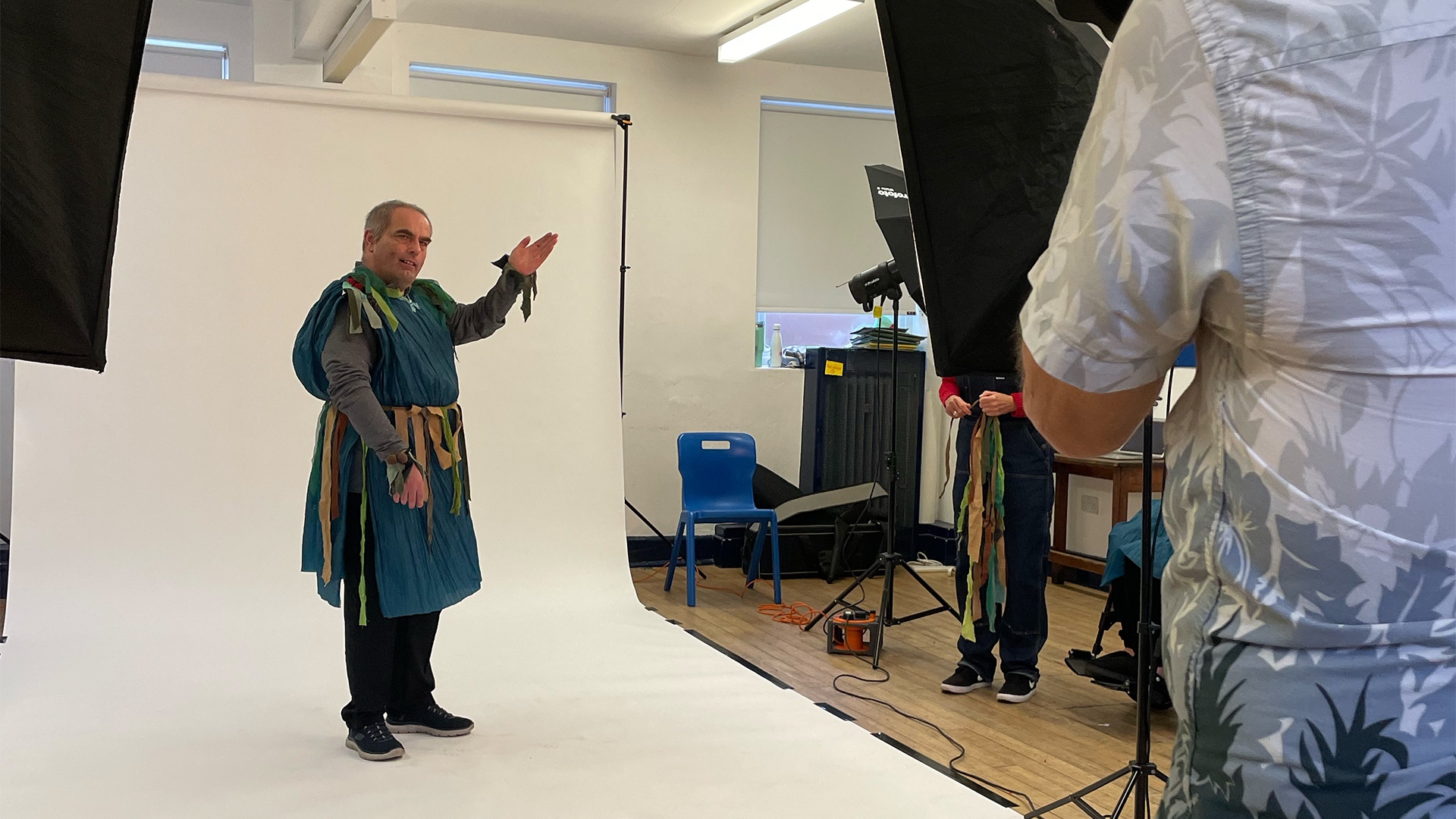
During March, our Core Company met with Pete and Holly from Photosymbols to discuss what images members thought were missing from their library. The group came up with lots of ideas for images of theatre including words like “actor”, “performance”, “props”, “masks”, “costume” “scriptwriting” and “sensory theatre”.
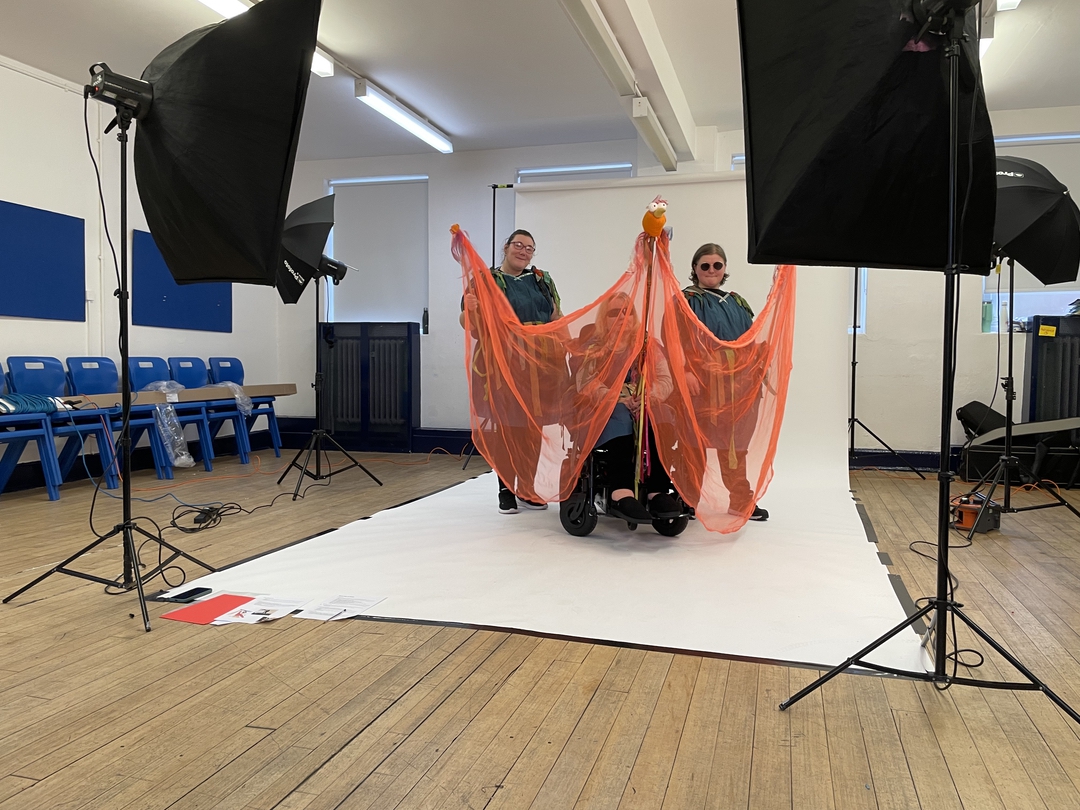
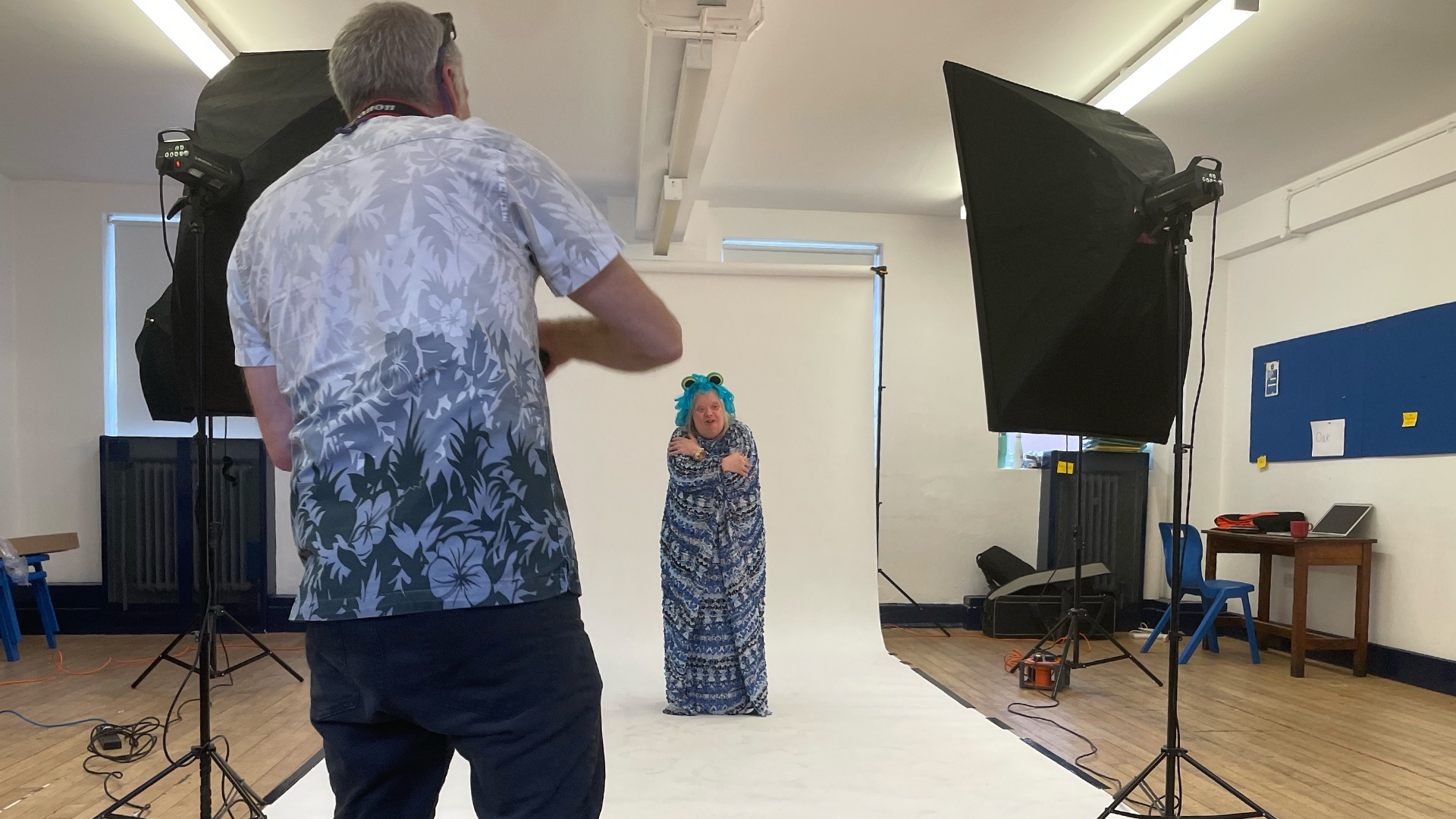
These ideas were brought together into a complete ‘shot list’ and, at the end of March, photographer Steve visited us for a day-long photoshoot. He transformed the space into a photography studio, and DIY actors took turns to feature in the images.
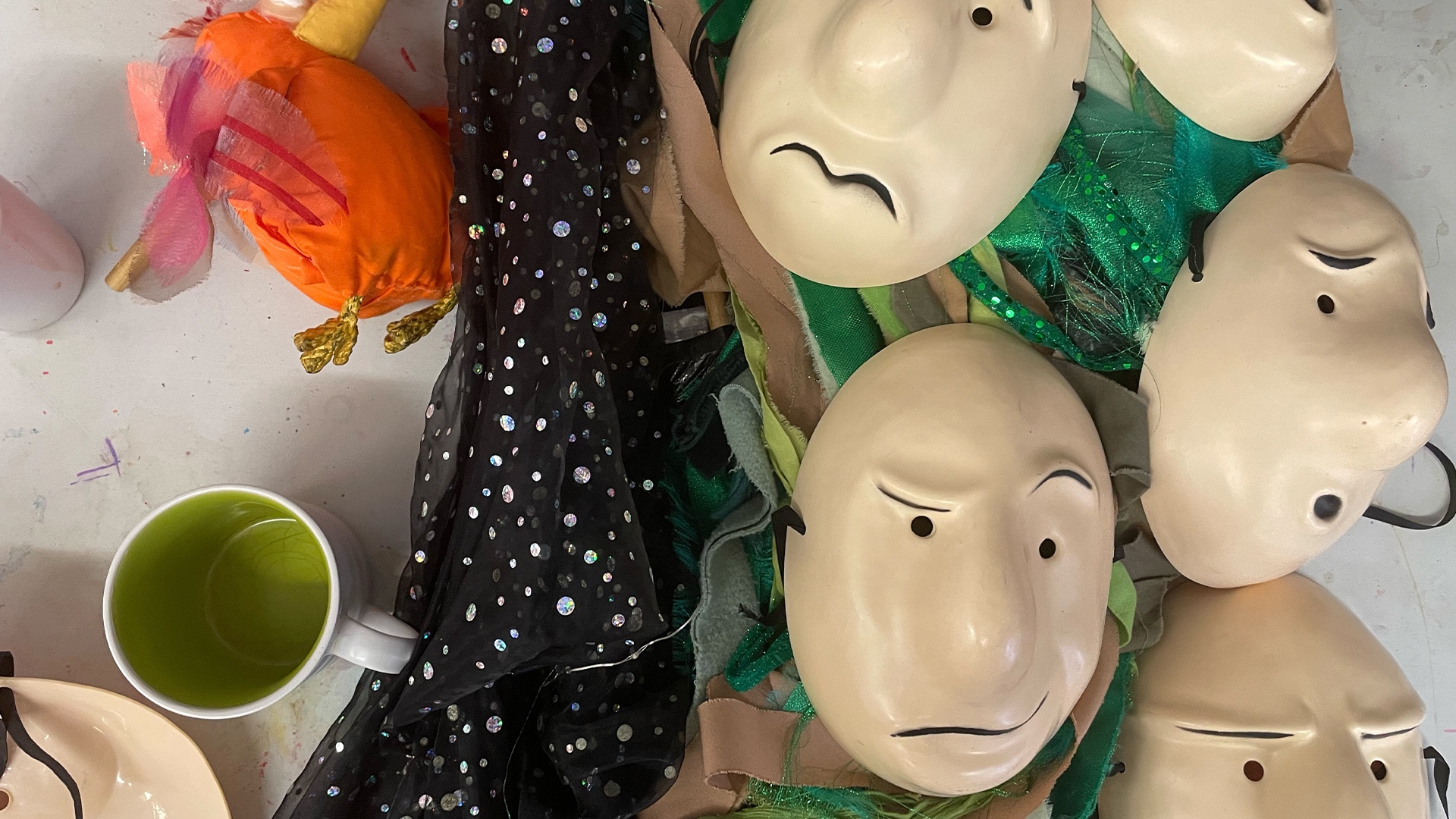
We used props, costumes and masks from previous shows to create photographs that were personal to us. And, after a busy day, we were able to complete all the images on the list! Holly continues:
“Our photographer Steve has shaped the photoshoot process over his many years of working with us. We take consent seriously and go at a pace that feels comfortable for everyone. People usually tell us that shoot days are lots of fun!”
Helping to develop the Easy Read standard
Later, Core Company members Scott, Amy, Charlotte, Chloe and Ange met with Photosymbols again – chatting with Founder and Director Pete Le Grys about other ways written information could be easier to understand.
“I think they’re asking people at DIY how they can make Easy Read better. I think that’s a good idea because it’s helping DIY to know how to do an Easy Read a bit better with pictures and words.”
Chloe
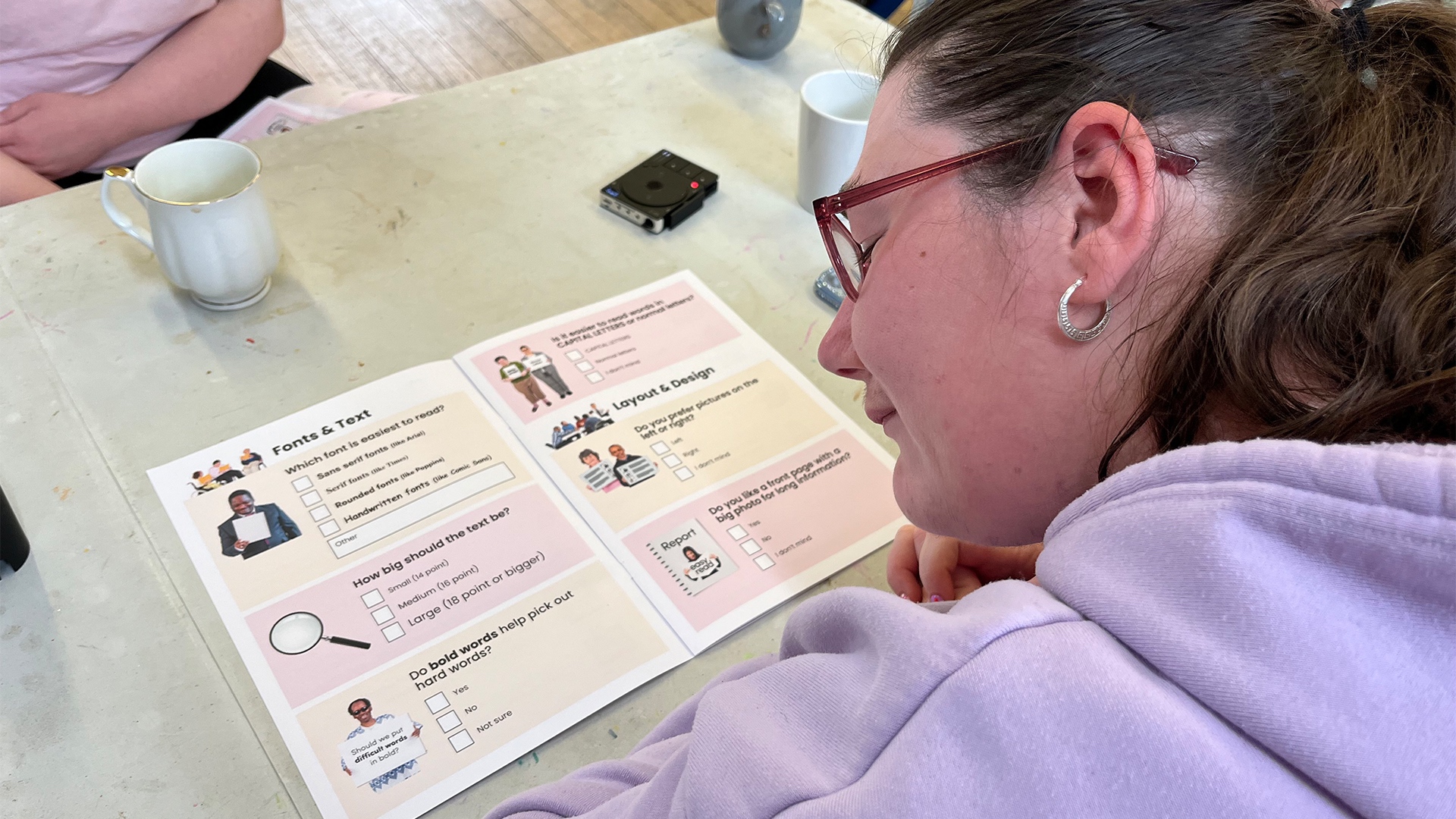
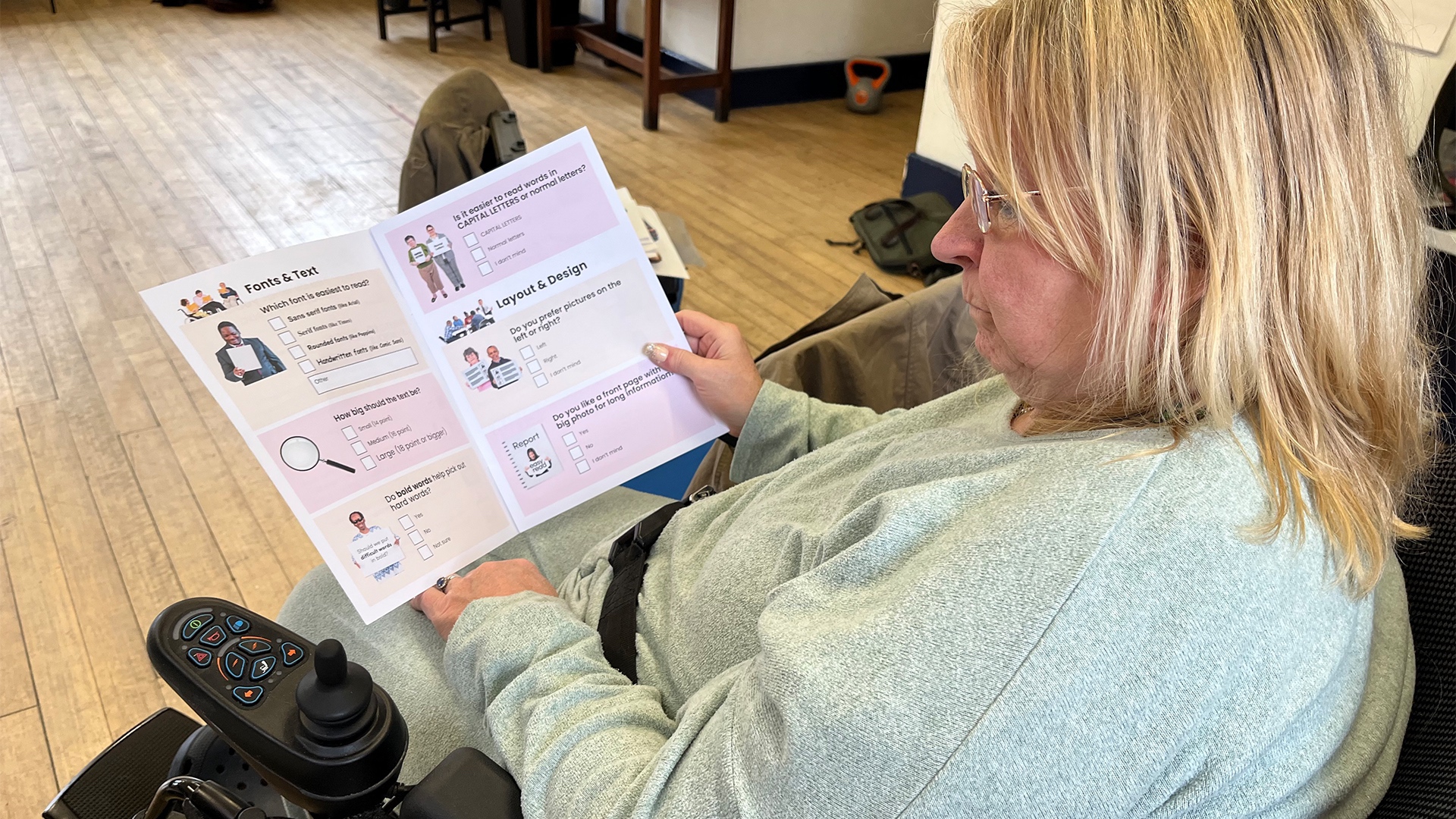
Members shared their views about things like:
- Which fonts are easiest to read
- How large text should be
- Whether capital letters or bold words make reading easier
- Whether we prefer pictures on the left or right
- Whether coloured backgrounds help.
“I liked it when he said, ‘How big do you want it?’, and I said ‘really big’ because I can’t read it small because I like it big so I can read the font.”
Ange
We also talked about the kinds of technology we have access to and how we like to use technology. Photosymbols are hosting similar discussions with other groups across the country, as part of work to develop their formal Easy Read Standard. Together with the library, this will encourage more organisations to produce genuinely accessible written documents.
“Some groups might not know what an Easy Read is or they might not ever have seen an Easy Read so it’s good that he’s going around the country and going to different groups.”
Charlotte
More than just photographs
It was brilliant to have had this experience but, for DIY, the impact is greater than the photoshoot alone. By being featured in the library, we’re part of an international movement to make written information more inclusive.
We’re also helping to make learning disability more visible; and our members have been directly involved in shaping what ‘accessible’ really looks like.
DIY performers can’t wait to see our own images on the Photosymbols website! We are so proud to play our part in making information more accessible for everyone.
To stay connected with DIY, subscribe to our email newsletter or follow us on social media.